First, figure out what the two sides share
The connection between units decides which treatments are reasonable.
- IfFully separate units with a firewall to the roof and separate mechanicalsThenTreat the vacant side much like a detached house, with ordinary notice to the neighbor.
- IfA shared, open attic above both sidesThenAir and any gas-phase treatment can move through the attic. Ask the provider how they will isolate it, or choose a method suited to partial occupancy.
- IfOne furnace or shared ductwork for both unitsThenDo not run a whole-unit gas treatment without shutting down and sealing the shared system. Get specific instructions in writing.
- IfA shared basement, laundry or utility roomThenSeal doors into the shared space, schedule around the other tenant's use, and post notice.
- IfYou do not know what is sharedThenInspect the attic hatch, basement and mechanical room before booking any treatment.
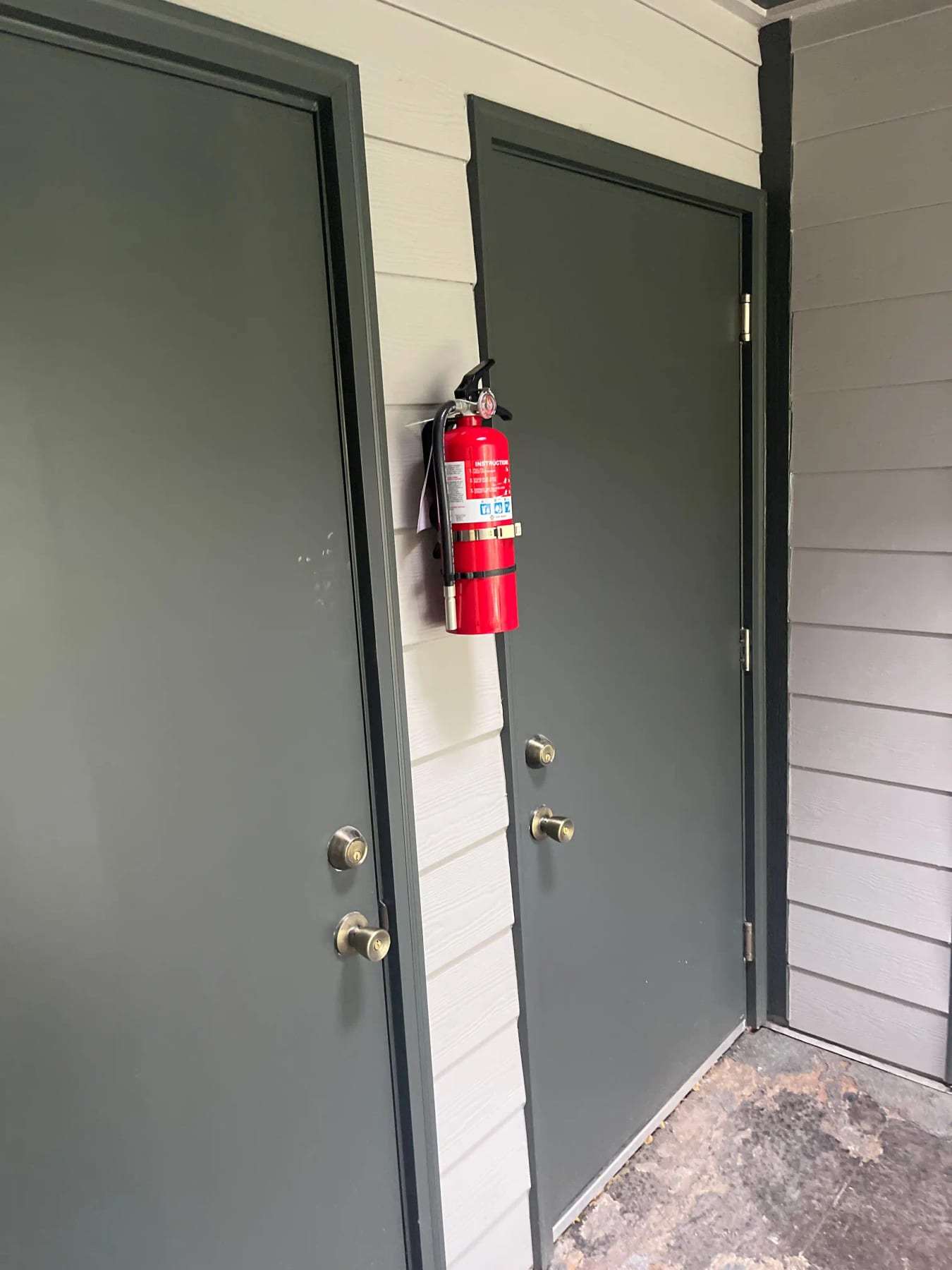
Pair of gray exterior doors with a fire extinguisher mounted beside them. Shown to illustrate the work described; not a job for this site or at any address named here.
Why duplexes need extra care
Many duplexes in older parts of Aurora were built as investment property or converted from larger houses, and the separation between units can be less complete than a modern townhome. Gaps around pipes, an unbroken attic, or a shared crawl space let air drift. That is often how smoke odor reached the vacant side in the first place, and it is also how a treatment could reach the occupied side.
The tenant who stays also has rights to quiet use of their home. Loud equipment, strong cleaning chemicals, blocked parking or a crew moving through a shared yard for several days can produce complaints. Notice, a clear schedule and a contact for questions go a long way.
Sometimes the honest finding is that odor is still arriving from the occupied side. If a neighbor smokes heavily, cleaning the vacant unit only resets the clock. Sealing penetrations and addressing smoking in the lease of the other unit may matter as much as the treatment itself.
Preparing the shared boundary
- Seal gaps around plumbing, electrical and cable penetrations in the shared wall.
- Check the attic for a continuous party wall; note any openings.
- Weatherstrip doors into any shared basement, laundry or utility space.
- Confirm the HVAC for each side is separate, or plan a shutdown if not.
- Give the occupied side written notice of dates, any re-entry restrictions and a contact.
- Plan where equipment and debris will sit so shared areas stay usable.
Questions to settle before scheduling
- Can the method you propose be used safely when the adjoining unit is occupied?
- How will you monitor whether treatment air is reaching the other side?
- Will the neighboring tenant need to leave for any part of the work?
- What sealing do you recommend at the shared wall and attic?
- If odor is entering from the occupied side, how will you tell?
General information for Aurora, not a quote or professional advice. In an emergency, call 911.