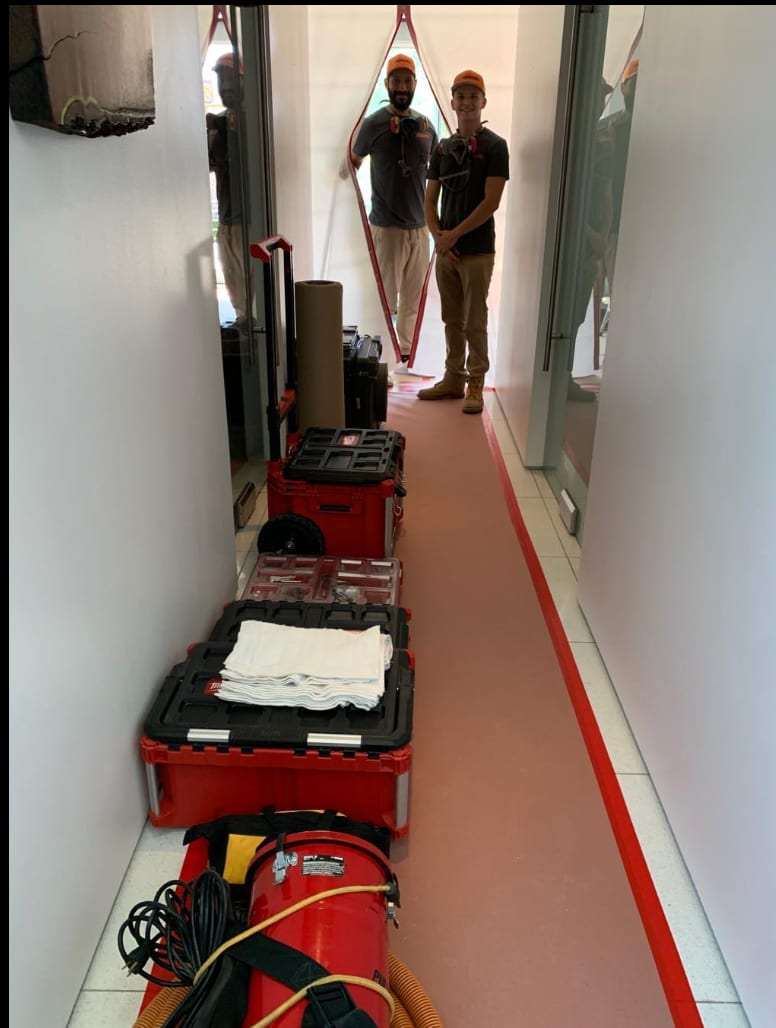
Narrow hallway with plastic containment and equipment cases. A representative photo of the task, not a record of work at any particular property.
The situation
Illustrative example. Not a real job or customer.
In this invented example, a tenant leaves a finished basement bedroom in a rental house. The room smells stale and earthy. The walls look clean, the carpet is a few years old, and the closet is full of leftover boxes.
- The landlord closes the door for a while, then smells the room and finds the odor strongest near the exterior wall and in the closet.
- A humidity meter reads high compared with the upstairs rooms.
- A corner of the carpet is lifted. The cushion is slightly damp and the slab beneath shows a faint stain.
- Outside, a downspout empties close to the foundation beneath the bedroom window.
- The landlord extends the downspout, removes the boxes, runs a dehumidifier for several days, and replaces the cushion.
In this illustration, humidity falls over the week and the smell fades. The landlord holds off on repainting until the room has stayed dry, then paints and relists.
Why the example avoided a quick fix
It would have been faster to repaint and spray the room. In this hypothetical, the landlord resisted that because the humidity reading and the damp cushion pointed to ongoing moisture. Fresh paint over a room that keeps taking on water often looks fine for a short time and then fails.
The steps taken were modest: redirecting water outside, drying the room, and replacing a layer that held smell. None required special equipment, and each addressed a cause rather than a symptom. In another house, the answer could be different, such as a cracked window well or a plumbing leak that calls for a tradesperson.
The example also shows the value of readings. A humidity number is not a diagnosis, but a falling number over several days is a useful sign that the room is drying.
Another point from the example is the value of delay. Repainting right away would have been tempting because the walls looked fine, but waiting a few days to see how the room responded to drying gave the landlord the information needed to choose the right fix.
Choices at each point
- IfHumidity stays high after several days of dehumidifyingThenLook for an active moisture source and consider asking a qualified professional to inspect.
- IfVisible mold growth is widespread or keeps returningThenDo not paint over it; seek an assessment before continuing.
- IfThe cushion is damp but the slab is dryThenReplace the cushion and dry the room before new flooring.
- IfEverything is dry and the smell is goneThenProceed with sealing, paint and a recheck.
General information for Aurora, not a quote or professional advice. In an emergency, call 911.